


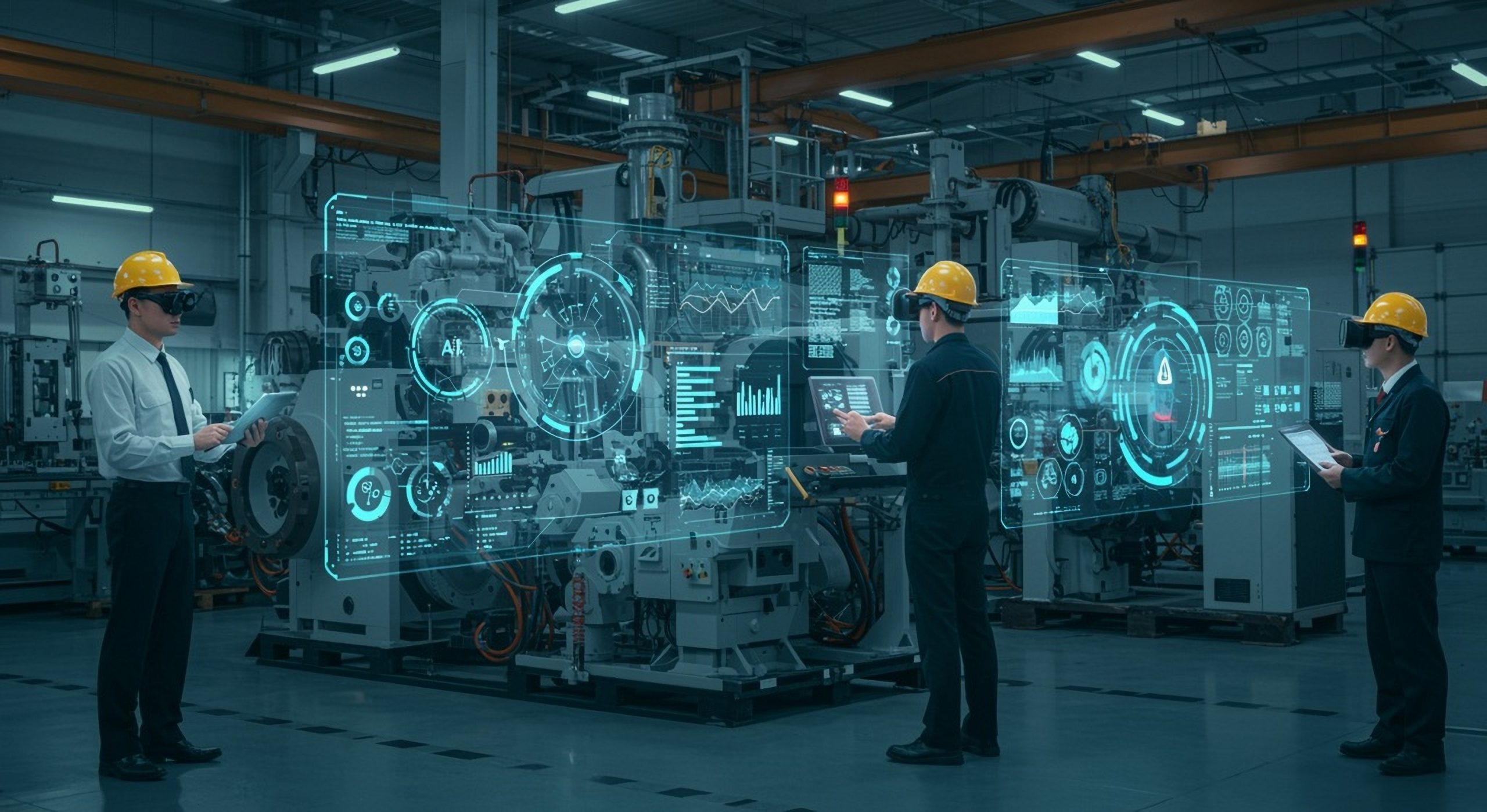
How Industrial Data Historian Improves Energy Efficiency in the Manufacturing Sector
Energy efficiency is no longer a “nice to have” in manufacturing — it’s a business-critical necessity. Rising global energy costs, increasing sustainability mandates, and the push towards carbon neutrality have made efficient energy management a top priority for industrial leaders.
Yet despite investments in automation and control systems, many manufacturers still struggle to answer a simple question: where and when is energy being wasted?
The truth is, most factories are rich in data but poor in insight. Machines, sensors, and control systems generate thousands of data points every second. Yet, up to 73% of industrial data goes unused for analytics or decision-making. Without proper context or historical comparison, this process data sits idle.
That’s where an industrial data historian comes in. An industrial data historian isn’t just a database. It’s a powerful system designed to collect, store, and analyse high-frequency operational data, offering the visibility manufacturers need to drive measurable energy savings. With real-time tracking and actionable insights, it turns raw data into a blueprint for efficiency.
In this article, you’ll learn how industrial data historians help manufacturers cut energy waste, lower operational costs, and meet sustainability goals — with best practices and integration strategies you can apply to your own operations.
For decades, Allied Solutions has helped manufacturers modernise their plants with advanced automation software, control, and data solutions.
As industries transition to smarter, more sustainable operations, the industrial data historian has become a cornerstone of digital transformation — enabling manufacturers to not only understand their energy consumption but continuously optimise it.
Key Takeaways
- An industrial data historian enables manufacturers to achieve meaningful energy efficiency by transforming real-time and historical process data into actionable insights that reveal waste, optimise performance, and support informed decision-making.
- Beyond simple monitoring, it unifies data across machines, systems, and timeframes — helping engineers and managers correlate energy use with production variables, automate reporting, and sustain continuous improvement.
- By integrating historian systems with reliable industrial data integration platforms, manufacturers can establish secure, scalable, and connected operations that turn raw industrial data into measurable efficiency gains and long-term sustainability advantages.
What Is an Industrial Data Historian?
An industrial data historian is a specialised database system that captures, compresses, and stores time-series data — meaning data recorded continuously over time — from machines, sensors, and control equipment across the plant floor.
Unlike a standard relational database, which is designed for transactional data, a historian is built to handle large volumes of high-speed process data while ensuring accuracy and retrievability.
These systems are common in industries such as oil and gas, semiconductors, food and beverage, and chemicals, where every second of operational data matters. Think of it as the digital memory of your factory — recording every pressure change, motor speed, or temperature fluctuation that occurs in real time.
Some leading historian platforms include AVEVA Historian, OSIsoft PI System, and GE Proficy Historian. Each offers advanced compression algorithms, redundancy features, and integration with SCADA (Supervisory Control and Data Acquisition), MES (Manufacturing Execution Systems), and ERP systems.
The true value of a historian lies in its ability to contextualise and analyse this massive flow of data. Instead of simply recording values, it helps engineers and decision-makers understand trends, correlations, and anomalies that point to inefficiencies — especially in energy use.
Why Energy Efficiency Demands More Than Just Monitoring
Many manufacturers already have energy meters and sensors installed throughout their facilities. Yet, these tools alone only offer snapshots of performance. They tell you what’s happening now — not why it’s happening or how often it occurs.
To make lasting improvements, you need to understand the full picture: patterns over time, cause-and-effect relationships, and contextual insights.
Here are the common challenges manufacturers face when trying to improve energy efficiency:
- Data Silos: Energy data often exists separately from production data, preventing cross-analysis between machine performance and energy use.
- Manual Reporting: Engineers rely on spreadsheets or logbooks that lack historical depth.
- Reactive Management: Without trend data, energy issues are often identified only after costs rise or systems fail.
- Lack of Actionable Insights: Raw data is collected but rarely transformed into decisions or KPIs.
An industrial data historian overcomes these challenges by creating a single, unified, time-stamped record of every energy-related event in the plant. It enables continuous improvement through visibility, automation, and intelligence.
How Industrial Data Historian Improves Energy Efficiency
An industrial data historian impacts energy efficiency on multiple fronts — from real-time monitoring to long-term process optimisation. Below are five key ways it transforms how manufacturers manage and reduce their energy consumption.
1. Real-Time Energy Monitoring
Traditional energy management relies on periodic readings or monthly utility bills. With a historian, manufacturers can monitor power consumption in real time — per line, per asset, or even per production batch.
Every spike, fluctuation, or idle power draw can be tracked as it happens. Operators can receive alerts when energy usage deviates from expected ranges, allowing immediate corrective action. This visibility empowers not only maintenance teams but also production managers to synchronise schedules, reducing idle load and improving power factor utilisation.
2. Historical Trend Analysis
Energy efficiency is rarely achieved overnight. It’s the result of understanding long-term trends and acting on them. A historian captures and compresses years of operational data, making it easy to spot hidden inefficiencies that accumulate over time.
Engineers can analyse:
- Equipment performance degradation (e.g. pumps or motors requiring more energy to produce the same output).
- Seasonal or shift-based consumption patterns.
- The effect of maintenance activities on energy performance.
By overlaying historical energy trends with production data, manufacturers can identify the root causes of waste — and prioritise the most impactful corrective actions.
3. Optimisation Through Correlation
A true breakthrough of historian systems lies in correlation analysis — the ability to link energy usage with multiple process variables. For example, how do ambient temperature, line speed, or product mix influence power demand?
By uncovering these relationships, manufacturers can:
- Determine optimal operating conditions for minimal energy use.
- Adjust production scheduling to avoid peak tariffs.
- Implement predictive models for energy forecasting.
Such insights move manufacturers beyond reactive management toward data-driven energy optimisation.
4. Automated Reporting and Benchmarking
Energy audits are often time-consuming, relying on manual data gathering and spreadsheet analysis. A historian automates this process by generating standardised, auditable reports.
You can benchmark:
- Energy use per unit of production (kWh/unit).
- Equipment efficiency against baseline values.
- Plant-wide or multi-site energy performance.
These automated reports support compliance with standards like ISO 50001 (Energy Management Systems) and corporate sustainability frameworks. They also provide executive-level visibility, allowing management to set realistic targets and track progress effortlessly.
5. Integration with Other Digital Systems
The modern manufacturing environment is interconnected. A historian acts as the central data hub, feeding energy data to other systems such as:
- MES: for tracking energy cost per production order.
- ERP: for integrating energy data into cost accounting.
- SCADA: for real-time process control.
This unified data ecosystem allows cross-functional insights — linking energy performance to production efficiency, quality, and maintenance strategies. It turns energy management into a shared responsibility across departments rather than a siloed initiative.
Implementation Best Practices

Deploying an industrial data historian is not simply an IT project — it’s an operational transformation. To maximise impact, manufacturers should follow these best practices:
1. Define Clear Objectives
Start by setting measurable goals: for example, “Reduce energy per unit output by 10% over six months.” These KPIs guide system design and reporting configuration.
2. Ensure Robust Data Collection
Reliable and accurate sensors are critical. Connect all major energy-consuming assets — compressors, chillers, HVAC, and production lines — to ensure complete visibility.
3. Normalise and Contextualise Data
Raw data needs context. Convert all measurements into standard units (kWh, Nm³, tonnes of steam, etc.) and align them with operational events (batch numbers, shifts, or product types).
4. Engage Both IT and OT Teams
The historian bridges information technology (IT) and operational technology (OT). Collaboration ensures data integrity, network security, and system scalability.
5. Leverage Visual Analytics
Empower decision-makers at every level with intuitive dashboards and energy maps. Operators see immediate issues, while executives track long-term trends and ROI.
6. Integrate with AI and Machine Learning
Combine historian data with advanced analytics platforms for predictive energy management. For example, using industrial AI and machine learning to forecast optimal load balancing or detect early signs of energy inefficiency.
Following these steps ensures the historian delivers not just data storage, but sustainable operational improvement.
Choosing the Right Industrial Data Historian Solution
Selecting the ideal industrial data historian is a strategic decision that impacts not only your plant’s efficiency but also its long-term journey when it comes to digital transformation in manufacturing. The right solution should balance scalability, speed, integration, and security — while remaining flexible enough to evolve with your operational and analytical needs.
Below are the key factors to consider when evaluating historian platforms for your facility.
Scalability
A modern data historian must be capable of scaling seamlessly as your plant grows. Whether managing thousands or millions of data tags, it should handle high-frequency data streams from sensors, PLCs, and control systems without performance degradation.
Scalability ensures that historical data can be stored and analysed over many years, providing the depth of insight required for continuous improvement and predictive maintenance. A scalable historian also supports multi-site operations, enabling centralised monitoring across geographically distributed plants.
Integration
Seamless integration is essential for achieving a unified data environment. The historian should easily connect with key industrial systems such as PLCs, DCS, MES, and ERP platforms.
This interoperability eliminates data silos, ensuring consistent and real-time information flow across all levels of the organisation — from shop floor to boardroom. Integration with industrial IoT (IIoT) software and cloud services also opens the door to advanced analytics and AI-driven optimisation.
Compression and Speed
Efficient data compression technology allows the historian to store massive volumes of time-series data while reducing storage costs. Combined with high-speed data retrieval, this ensures engineers and analysts can quickly access relevant information for troubleshooting or performance evaluation.
A well-designed historian should offer lossless compression, maintaining data fidelity while enabling rapid trend visualisation and historical analysis.
Reliability
Reliability is non-negotiable in manufacturing. The historian must have built-in redundancy, failover mechanisms, and automatic backup to ensure uninterrupted data collection, even during network or hardware failures. High availability makes sure that no critical operational data is lost, which is vital for compliance, diagnostics, and long-term process optimisation.
Analytics Capability
Beyond storage, a capable historian should include native analytics and visualisation tools. Built-in dashboards, trend charts, and reporting functions empower engineers to analyse performance data in real time without relying on external software.
Advanced historians may also support machine learning models for predictive insights, helping plants move from reactive to proactive decision-making.
Cybersecurity
With the growing convergence of IT and OT systems, industrial cybersecurity is a top priority. The chosen historian must provide robust protection for both on-premise and cloud deployments, including encryption, role-based access control, and secure communication protocols.
Compliance with international cybersecurity standards ensures data integrity and protects sensitive operational information from cyber threats.
Vendor Support
Finally, strong vendor support is crucial for long-term success. Look for providers offering local expertise, regular updates, and 24/7 technical assistance. Reliable support ensures system uptime, smooth integration, and faster issue resolution — minimising disruptions to critical operations.
Our team partners with global technology providers to design, deploy, and maintain historian systems that meet all these criteria — ensuring your data infrastructure is robust, scalable, and ready to support future energy management and digital transformation initiatives.
Turning Data into Energy Intelligence
In today’s competitive manufacturing landscape, energy efficiency is not achieved by chance — it’s engineered through data-driven insight. An industrial data historian enables that transformation by giving manufacturers complete visibility into how, when, and why energy is consumed.
The result is more than reduced utility bills. It’s a foundation for:
- Sustainability leadership: Lower carbon emissions and compliance with environmental standards.
- Operational resilience: Early detection of energy anomalies prevents costly downtime.
- Continuous improvement: Historical data fuels ongoing optimisation and innovation.
By integrating historian systems with analytics and automation, manufacturers move from reactive to proactive management — turning operational data into strategic energy intelligence.
According to recent research, more than 60% of manufacturers plan to increase investments in data-driven technologies like historians and analytics platforms by 2026, reinforcing that the shift toward connected, insight-driven operations is accelerating across global industries.
To unlock this level of efficiency and visibility, you need more than just data storage — you need seamless connectivity across your entire industrial ecosystem. That’s where Allied Solutions’ Industrial Data Integration service comes in.
Allied Solutions delivers Industrial IoT software and data historian tools that connect the plant floor to IT systems and up to the boardroom. Our secure, scalable platform bridges OT and IT environments, enabling real-time data flow, advanced analytics, and smarter decision-making.
Whether you need OPC, proprietary, or IT protocol connectivity, or IoT-ready architecture with SSL/TLS encryption and redundancy options, our solutions ensure that your data works together — safely, efficiently, and intelligently. Contact us today and let’s start turning your energy insights into measurable, sustainable business performance.
Frequently Asked Questions
What is the difference between a data historian and a traditional database?
A traditional database handles transactional or business data, while a data historian is purpose-built for storing and analysing high-frequency time-series data from industrial equipment and sensors. Historians are optimised for speed, compression, and long-term data integrity, making them ideal for real-time industrial monitoring and analysis.
Can a data historian work with cloud platforms?
Yes, many modern data historians integrate seamlessly with cloud platforms, allowing manufacturers to access, analyse, and share process data securely across sites. Cloud integration also supports advanced analytics, machine learning, and remote monitoring capabilities that enhance energy and operational efficiency.
How secure is an industrial data historian system?
Industrial data historians are designed with multilayered security protocols, including user authentication, encryption, and role-based access controls. When integrated properly, they comply with industrial cybersecurity standards and can safely operate in both on-premise and cloud environments.
What industries benefit most from using a data historian?
Industries that rely heavily on continuous operations and process optimisation — such as oil and gas, energy, food and beverage, semiconductors, and chemicals — benefit the most. These sectors depend on precise, high-speed data collection to improve performance, reduce energy consumption, and ensure regulatory compliance.
How does a data historian support predictive maintenance?
A data historian continuously records equipment performance and environmental conditions, making it easier to detect anomalies or trends that indicate potential failures. By combining this data with predictive analytics tools, manufacturers can schedule maintenance proactively, avoiding costly downtime and energy inefficiencies.